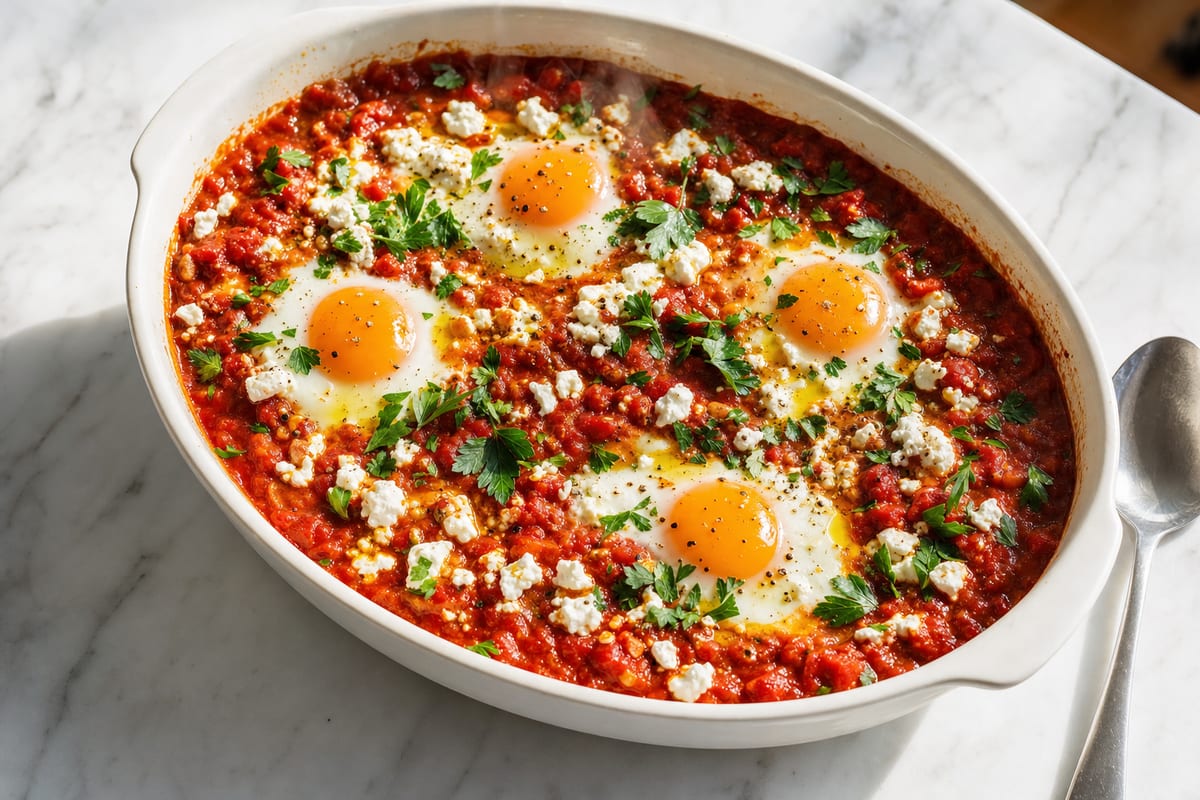
Eggs poached in a deeply spiced tomato sauce, finished with crumbled feta and parsley. One pan, 30 minutes, and the answer to almost any "what's for dinner?" question.
Ingredients
- 2 tbspolive oil
- 1yellow onion, finely diced
- 1red bell pepper, diced
- 4garlic cloves, minced
- 1 tspground cumin
- 1 tspsweet paprika
- ¼ tspred pepper flakes
- 1 tbsptomato paste
- 28 ozcanned crushed tomatoes
- ½ tspkosher salt
- 6large eggs
- 4 ozfeta cheese, crumbled
- fresh parsley, chopped, for serving
- crusty bread, for serving
- 1
Heat the olive oil in a large skillet over medium heat. Add the diced onion and bell pepper and cook for 6–8 minutes, stirring occasionally, until softened and lightly golden at the edges.
- 2
Stir in the garlic, cumin, paprika, and red pepper flakes. Cook for 30 seconds until fragrant. Add the tomato paste and stir constantly for one minute to deepen its flavor.
- 3
Pour in the crushed tomatoes and salt. Bring to a simmer and reduce heat to medium-low. Cook uncovered for 12–15 minutes, stirring occasionally, until the sauce is thick and a spoon leaves a trail across the pan.
- 4
Use the back of a spoon to make six small wells in the sauce. Crack one egg into each well. Cover the pan and cook for 4–6 minutes, until the whites are set but the yolks are still soft.
- 5
Remove from heat. Scatter the crumbled feta and parsley over the top. Serve immediately straight from the pan with bread.
Nutrition
Per serving · estimated
- Protein16 g22%
- Carbs18 g25%
- Fat17 g53%
More detail
- Fiber4 g
- Sugar9 g
- Saturated fat6 g
- Cholesterol285 mg
- Sodium720 mg
Nutrition values are estimates based on standard ingredient databases. Actual values may vary depending on brands, substitutions, and serving sizes.
Shakshuka is the quiet hero of a well-stocked kitchen. A can of tomatoes, a few eggs, an onion, a little spice — that is most of it. Built right, it tastes far more involved than it is, which is exactly the kind of dish a home cook needs in regular rotation.
The version below leans Israeli — heavy on cumin and paprika, finished with feta and herbs. There are Tunisian and Yemeni versions that lean different ways. None of them are wrong; the spirit is the same: sauce simmers down on the stove, eggs go in whole, lid on for a few minutes, eat with bread.
What makes a good shakshuka
Three things separate a great shakshuka from a forgettable one.
Reduce the sauce before you add the eggs. A watery sauce makes for slack, sad eggs. Let the tomatoes cook down until they are jammy and a wooden spoon leaves a trail across the bottom of the pan. This takes ten minutes longer than you think it will, and it is the whole game.
Make wells, do not stir. Once the sauce is reduced, use the back of a spoon to make small wells in the surface and crack each egg directly into one. This keeps the whites contained and lets you control the doneness of each yolk individually.
Cover the pan. The lid traps steam, which sets the tops of the whites without overcooking the bottoms. Three to five minutes covered, depending on how runny you want the yolks.
What to serve it with
Crusty bread is non-negotiable. Sourdough, ciabatta, or a torn baguette — anything that can survive a yolk. Pita warmed on a dry pan also works beautifully. For a bigger meal, pair with a simple salad of cucumber, parsley, and lemon.
Make-ahead and storage
The sauce keeps for three days in the fridge and actually improves overnight as the spices settle. Reheat the sauce, make fresh wells, crack fresh eggs. Do not store cooked shakshuka with the eggs — they go rubbery on the second day.
If you have leftover sauce with no eggs, it makes an excellent base for pasta, a topping for grilled chicken, or — bear with me — a passable pizza sauce.