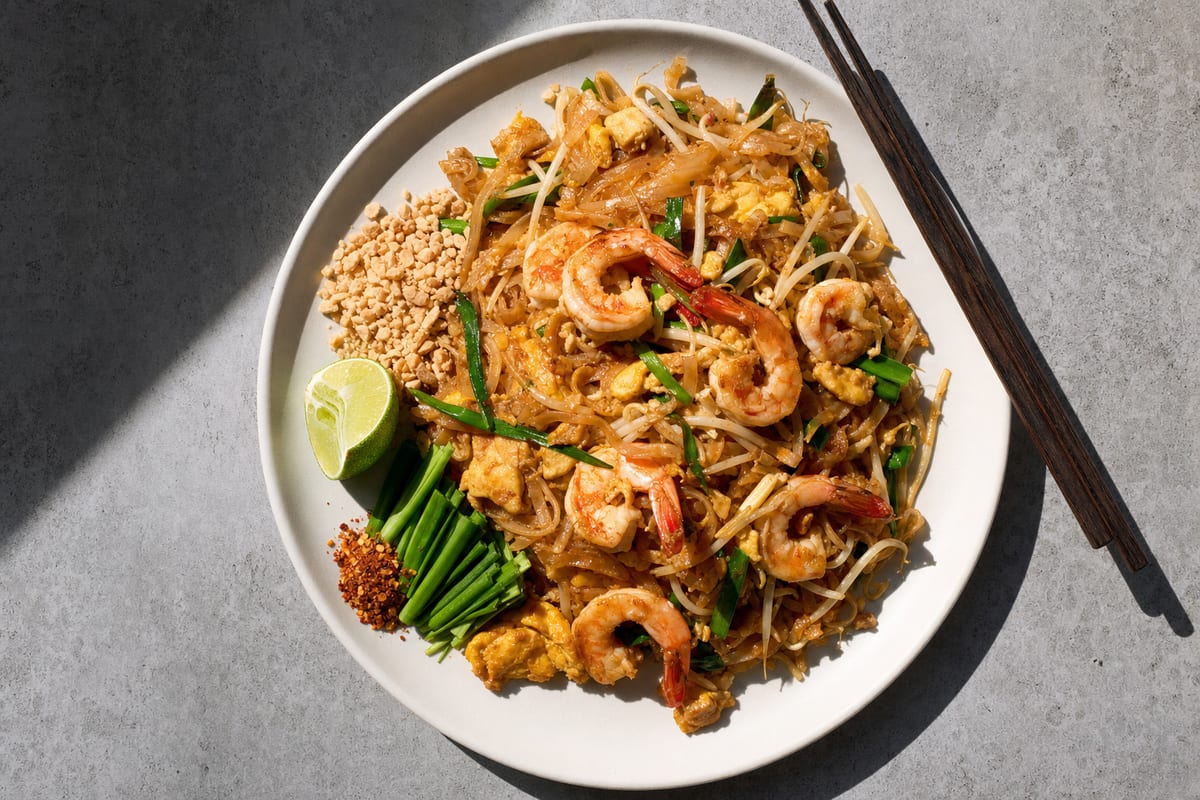
Tamarind-glazed rice noodles with shrimp, egg, peanuts, and crisp bean sprouts. The trick is a stir-fry sauce mixed in advance and a hot wok worked in two batches.
Ingredients
Sauce
- 3 tbsptamarind paste
- 3 tbspfish sauce
- 3 tbsppalm sugar, or brown sugar
- 1 tbspsoy sauce
- ½ tspred chili flakes
Stir-fry
- 8 ozdried flat rice noodles, pad thai noodles
- 3 tbspneutral oil
- 4garlic cloves, minced
- 2 tbsppreserved radish, minced, optional
- 12large shrimp, peeled and deveined
- 4 ozfirm tofu, cubed
- 2large eggs, lightly beaten
- 2 cupsbean sprouts
- 4scallions, cut into 2-inch pieces
To serve
- ½ cuproasted peanuts, crushed
- lime wedges
- fresh cilantro
- chili flakes
- 1
Whisk the tamarind paste, fish sauce, palm sugar, soy sauce, and chili flakes together in a small bowl until the sugar dissolves. Set aside near the stove.
- 2
Place the dried rice noodles in a large bowl and cover with warm tap water. Soak for 20–30 minutes, until pliable but still firm. Drain just before cooking.
- 3
Heat 1.5 tablespoons of oil in a large wok or skillet over the highest heat your stove can produce until smoking. Add half the garlic and preserved radish, stir for 10 seconds, then add half the shrimp and tofu. Stir-fry for 90 seconds until the shrimp turn pink.
- 4
Push everything to one side of the wok. Pour 1 lightly beaten egg into the empty space, let it set for 15 seconds, then scramble it into broken curds.
- 5
Add half the drained noodles and half the sauce. Toss vigorously with two spatulas for 2 minutes until the noodles soften, absorb the sauce, and turn glossy with caramelized edges.
- 6
Add half the bean sprouts and scallions. Toss for 30 seconds until just wilted but still crisp. Transfer to a plate. Repeat with the remaining ingredients for a second batch.
- 7
Serve immediately, topped with crushed peanuts, cilantro, lime wedges, and chili flakes on the side.
Nutrition
Per serving · estimated
- Protein24 g18%
- Carbs70 g52%
- Fat18 g30%
More detail
- Fiber4 g
- Sugar14 g
- Saturated fat4 g
- Cholesterol120 mg
- Sodium1140 mg
Nutrition values are estimates based on standard ingredient databases. Actual values may vary depending on brands, substitutions, and serving sizes.
Pad thai is a noodle stir-fry that lives or dies on three things: a properly balanced sauce, rice noodles soaked but not cooked, and a wok that is genuinely, dangerously hot.
The version below uses shrimp, but chicken, tofu, or both work just as well. The principle is the same.
The sauce
The sauce is sweet, sour, salty, and savory all at once. Tamarind paste gives the sour. Palm sugar gives the sweet (brown sugar works, slightly different but close). Fish sauce gives the salt. A small amount of soy sauce rounds it out.
Mix the sauce in a bowl before you start cooking. The actual stir-fry takes under five minutes once the wok is hot, and you do not have time to measure things mid-toss. Sauce in the bowl, ready to go.
The proportions below land in the middle of the spectrum — adjust to taste once you have made it once. Some people like it sweeter, some sourer.
The noodle hack
Dry rice noodles are stiff and brittle. They need to be softened in warm (not boiling) water for 15–30 minutes until they are pliable but still firm — they will finish cooking in the wok. If you boil them, they will be mushy in the final dish.
Drain them right before they hit the wok. Do not let them sit drained — they will stick together. Toss with a teaspoon of oil if you need to hold them.
Cook in batches
Two portions max per round, even in a 14-inch wok. The reason is heat. The wok needs to stay screaming hot through the entire cook, and a full batch of noodles drops the temperature too far. Better to do two rounds of two portions each, four minutes per round, than one big sad sticky batch.
What to serve with it
A wedge of lime, a pile of crushed roasted peanuts, fresh chili flakes, sliced fresh chili, extra sugar, and extra fish sauce on the side. This is the Thai street-food convention — every diner finishes their own plate to taste.