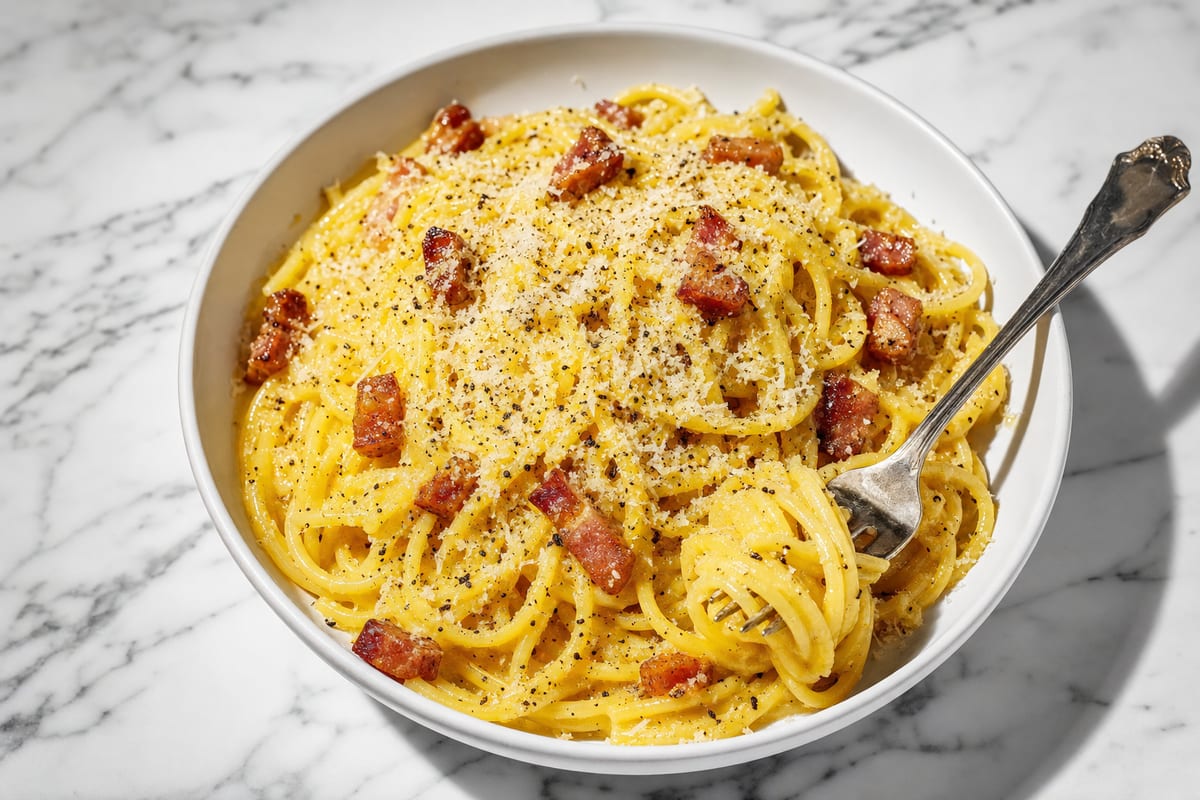
Four ingredients, one pan, twenty minutes. Real Roman carbonara has no cream — just eggs, cheese, guanciale, and pepper. Here is how to make it without scrambling the eggs.
Ingredients
- 1 lbspaghetti
- 6 ozguanciale, or pancetta, cut into ¼-inch cubes
- 4large egg yolks
- 2whole large eggs
- 1 cupPecorino Romano, finely grated
- ¼ cupParmigiano-Reggiano, finely grated, optional
- 1½ tspblack pepper, freshly cracked, plus more to serve
- kosher salt, for pasta water
- 1
Bring a large pot of salted water to a rolling boil. The water should taste like the sea.
- 2
While the water comes up, place the cubed guanciale in a large cold skillet. Set over medium-low heat and cook for 8–10 minutes, stirring occasionally, until the fat has rendered out and the cubes are deeply golden and crisp at the edges. Remove from heat and leave the rendered fat in the pan.
- 3
In a medium bowl, whisk together the egg yolks, whole eggs, Pecorino, Parmigiano (if using), and black pepper until smooth and thick. The mixture should look like a paste.
- 4
Add the spaghetti to the boiling water and cook one minute less than the package says. Just before draining, scoop out at least one cup of the starchy pasta water.
- 5
Use tongs to transfer the pasta directly from the pot to the skillet with the guanciale. The pan should be off the heat. Toss to coat the pasta in the rendered fat. Wait ten seconds for the pan to cool slightly.
- 6
Pour the egg-and-cheese mixture over the pasta while tossing constantly with tongs. Keep tossing for 30 seconds. The sauce should turn glossy and coat every strand. Add splashes of hot pasta water as needed — usually 2 to 4 tablespoons — to loosen the sauce until it slides off the tongs in sheets.
- 7
Serve immediately on warm plates. Top with extra Pecorino and a heavy crack of black pepper.
Nutrition
Per serving · estimated
- Protein28 g16%
- Carbs78 g44%
- Fat32 g40%
More detail
- Fiber3 g
- Sugar3 g
- Saturated fat12 g
- Cholesterol240 mg
- Sodium980 mg
Nutrition values are estimates based on standard ingredient databases. Actual values may vary depending on brands, substitutions, and serving sizes.
Carbonara is the most argued-about pasta in Italy. The base recipe — eggs, cheese, cured pork, black pepper — is settled. Everything around it is a battlefield. Pancetta versus guanciale. Pecorino versus Parmigiano. Whole eggs versus yolks only. Whether to add a splash of pasta water (yes) or cream (absolutely not).
This recipe stays close to the Roman version. Guanciale if you can find it, pancetta if you cannot, bacon as a last resort. Pecorino Romano gives the sharpness; a small amount of Parmigiano can soften it. The eggs are a mix of whole eggs and yolks for richness without rubbery whites.
The thing that ruins carbonara
Heat. The eggs cook the moment they touch a too-hot pan, and you end up with scrambled-egg pasta. The fix is to take the pan off the heat before the eggs go in, and to use the residual heat plus the hot pasta to make a creamy emulsion.
Move the cooked pasta into the pan with the rendered pork fat. Off heat. Wait ten seconds. Pour the egg-and-cheese mixture in while tossing the pasta vigorously with tongs. Add a splash of starchy pasta water if it looks tight. The sauce should be glossy and coat each strand without ever bubbling.
Why guanciale matters
Guanciale is cured pork jowl. It has more fat and a slightly funkier flavor than pancetta, and it renders into the silkiest, most flavorful base for the sauce. Most decent Italian delis carry it. If you are stuck with pancetta or bacon, the dish is still good — just a little leaner. Avoid lardons or breakfast bacon if possible; they bring smoke that does not belong here.
Pasta shape
Spaghetti is traditional. Rigatoni is also defensible because the ridges hold the sauce. Avoid anything too small or delicate. The pasta should be sturdy enough to be tossed hard in the pan without breaking.
Pasta water is not optional
Save at least a cup of the cooking water before draining. The starch is what helps the sauce cling to the pasta. You will not use all of it, but you need enough to loosen the sauce as it cools and tightens.